Portable WiFi Solutions for RVs – Starlink vs T-Mobile vs Verizon
Reliable internet access has transitioned from a luxury to a necessity for modern RV travelers. Whether it’s for remote work, staying connected with loved ones, streaming entertainment, or navigating unfamiliar routes, a robust WiFi solution is crucial. This article compares three leading options for portable WiFi for RVs: Starlink, T-Mobile Home Internet, and Verizon hotspot & cellular plans. We’ll explore their strengths and weaknesses to help you determine the best RV WiFi for your specific needs and travel style. These solutions provide different approaches: satellite internet (Starlink), 5G/4G fixed wireless (T-Mobile Home Internet), and cellular hotspot (Verizon).
⭐What RV Travelers Need in a WiFi Solution
Choosing the right RV internet solutions requires careful consideration of several factors:
- Coverage: Crucial for staying connected, especially in remote areas.
- Speed: Determines how smoothly you can stream, video conference, or download files.
- Reliability: Consistent connectivity is vital, minimizing frustrating interruptions.
- Congestion: Performance can suffer during peak usage times.
- Cost: Includes upfront equipment expenses and monthly subscription fees.
- Portability: Ease of setup and takedown for frequent relocation.
- Equipment: The hardware needed and its power requirements.
For RV travelers, these factors take on added significance due to the varied landscapes and infrastructure encountered on the road. The ideal solution for someone primarily traveling in urban and suburban areas will differ greatly from the needs of those venturing deep into off-grid locations. Considering your typical travel scenarios is key to making the right choice.
🛰️Starlink for RVs
Starlink, SpaceX’s satellite internet service, offers a compelling solution for RVers seeking internet access in remote areas where traditional terrestrial options are unavailable.
Overview of the Technology: Starlink uses a network of low Earth orbit (LEO) satellites to provide internet connectivity. RV users require a Starlink dish that automatically aligns to the satellites.
Coverage Quality in Remote Areas: Starlink excels in providing coverage in areas where cell service is weak or nonexistent. Its satellite-based infrastructure allows for connectivity in national parks, remote campgrounds, and off-grid locations.
Real-World Speeds and Performance: Starlink advertises speeds of up to 220 Mbps download and 25 Mbps upload, though actual speeds can vary depending on location, time of day, and network congestion. Users generally report sufficient bandwidth for streaming, video conferencing, and other data-intensive activities.
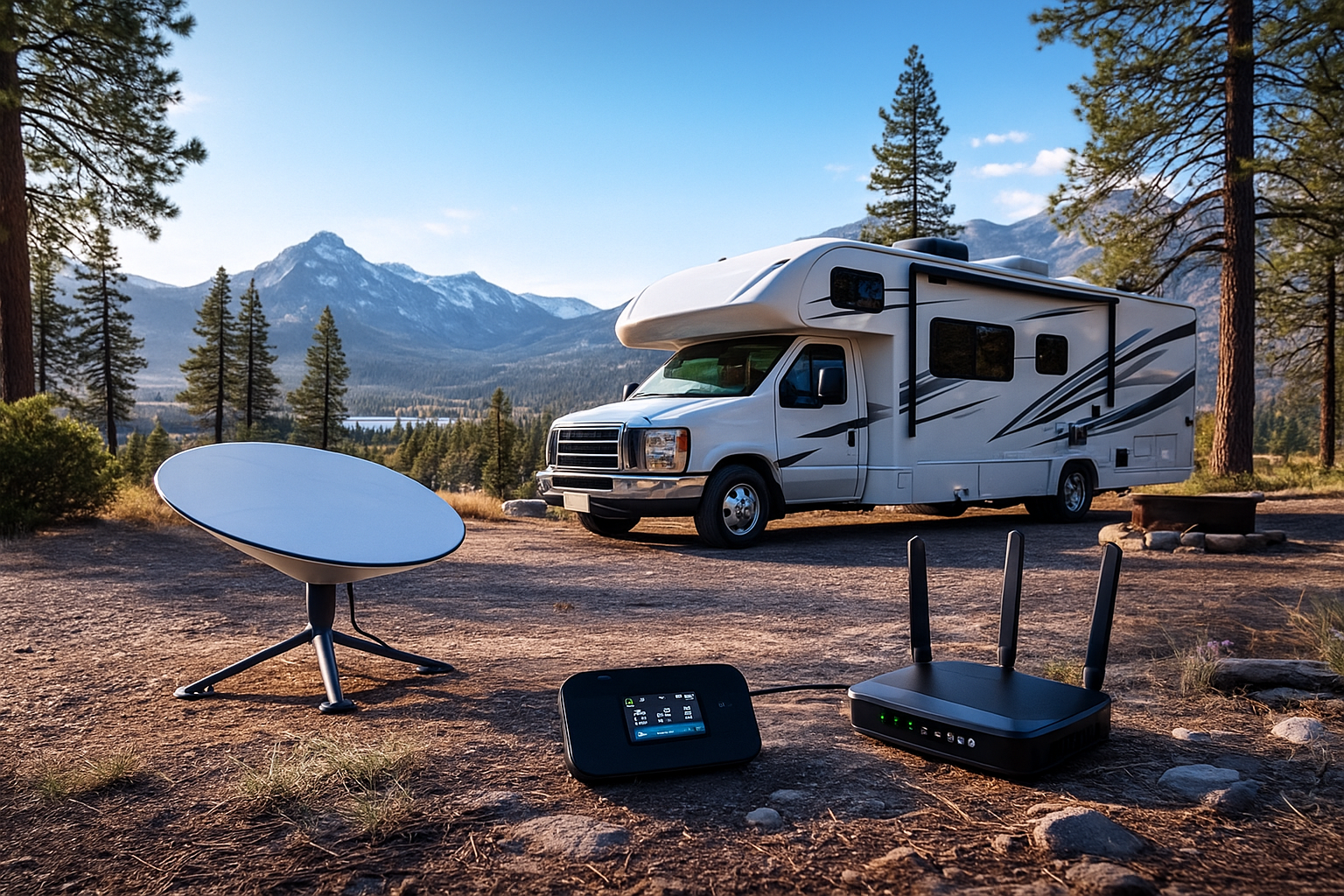
Hardware Requirements: The Starlink RV kit includes the Starlink dish, a WiFi router, power supply, and cables. The dish requires a clear view of the sky. Consider the added cost of potentially needing to mount the dish to your RV.
Pros and Cons:
- Pros:
- Excellent coverage in remote and rural areas.
- High download and upload speeds.
- Relatively low latency compared to traditional satellite internet.
- Cons:
- Higher upfront equipment cost.
- Requires a clear view of the sky.
- Can be susceptible to weather interference (heavy rain or snow).
- Higher monthly cost compared to cellular solutions.
📶 T-Mobile Home Internet for RV Use
T-Mobile Home Internet offers a fixed wireless solution that leverages T-Mobile’s 5G and 4G LTE networks. While designed for residential use, it can be adapted for RV travel.
How it Works: T-Mobile provides a gateway device that connects to the cellular network and creates a WiFi hotspot. Unlike traditional home internet, there are no wired connections.
Best Performance Locations: T-Mobile Home Internet performs best in urban and suburban areas with strong T-Mobile network coverage. Rural performance may be limited depending on signal strength and availability. It’s important to check coverage maps before relying on this service in specific locations.
Setup, Portability, and Cost: Setup is simple; just plug in the gateway device. The service is reasonably portable, as the gateway is compact. T-Mobile Home Internet offers a competitive monthly price, often lower than Starlink. Some users report needing to change their registered address with T-Mobile to access service in new areas, requiring ongoing customer service interaction.
Pros and Cons:
- Pros:
- Relatively affordable monthly cost.
- Easy setup and portability.
- Good speeds in areas with strong T-Mobile coverage.
- Cons:
- Limited coverage in rural areas.
- Speeds and reliability can be affected by network congestion.
- Technically not designed for mobile use, so T-Mobile could limit access if used outside registered service area.
- Performance degrades significantly in areas with weak T-Mobile signals.
📡Verizon Hotspot & Cellular Plans for RVers
Verizon offers a variety of RV connectivity options through its cellular plans and mobile hotspot devices. This is a popular choice for RVers seeking broad nationwide coverage.
Strength in Nationwide Coverage: Verizon boasts the most extensive 4G LTE network coverage in the United States, making it a reliable choice for travelers who prioritize consistent connectivity across diverse geographic locations. 5G coverage is expanding, but still less prevalent in rural areas.
Hotspot Device Options: Verizon provides a range of hotspot devices, from basic models to more advanced options with faster speeds and larger battery capacities. Many smartphones can also act as hotspots, albeit with potential battery drain.
Speed Variability and Congestion: While Verizon’s network is widespread, speeds can vary considerably depending on location, network congestion, and data plan. Users may experience slower speeds during peak hours or in densely populated areas. Some plans may have data caps or throttling policies that reduce speeds after a certain data threshold is reached.
Pros and Cons:
- Pros:
- Extensive nationwide coverage.
- Variety of hotspot device options.
- Established and reliable cellular network.
- Cons:
- Speeds can vary significantly depending on location and congestion.
- Data limits and throttling can restrict usage.
- Can be more expensive than other cellular options.
- Performance in very remote areas may still be limited.
📊 Side-by-Side Comparison Table
| Feature | Starlink RV | T-Mobile Home Internet RV | Verizon Hotspot & Cellular Plans |
|---|---|---|---|
| Coverage | Excellent in remote areas | Good in urban/suburban areas, poor in rural | Excellent nationwide |
| Speed | Up to 220 Mbps down, 25 Mbps up | Varies, typically 25-100 Mbps down | Varies, typically 5-50 Mbps down |
| Setup Complexity | Moderate (requires dish setup) | Simple (plug and play) | Simple (device activation) |
| Hardware | Starlink dish, router, power supply | T-Mobile Gateway device | Hotspot device or smartphone |
| Monthly Cost | Higher | Moderate | Moderate to High |
| Off-grid Capability | Excellent | Limited | Good, depends on cell tower availability |
| Data Limits/Throttling | Varies by plan, throttling possible during peak times | Varies by plan, throttling possible. | Varies significantly by plan, often capped |
Which WiFi Solution Is Best for Your RV Lifestyle?
Choosing the right portable WiFi for RVs depends entirely on your specific travel habits and internet needs:
- Full-time RVers: Starlink provides the most consistent solution, especially if you travel to remote areas frequently. If you mostly stay in cities and towns, T-Mobile or Verizon may suffice.
- Remote Workers: Starlink’s higher speeds and lower latency make it ideal for video conferencing and other bandwidth-intensive tasks. T-Mobile is a good budget option when within good coverage areas.
- Weekend Travelers: Verizon hotspot plans are a good option for short trips, offering a balance of coverage and cost.
- Off-grid Explorers: Starlink is the clear winner, providing internet access in areas where cellular signals are unavailable.
- Budget-conscious RVers: T-Mobile Home Internet offers the most affordable option, but only if your travels are primarily in areas with good T-Mobile coverage. Be aware that use outside your “home” coverage area may be restricted. A lower-tier Verizon plan can also be considered if coverage is more important than speed.
Conclusion
Choosing the best RV WiFi solution requires careful consideration of your specific needs, travel habits, and budget. Starlink offers unparalleled coverage in remote areas, while T-Mobile Home Internet provides a more affordable option in urban and suburban locations. Verizon hotspot plans offer extensive nationwide coverage and a variety of options. The ideal choice depends entirely on your individual circumstances.
Explore our website for more RV tips, reviews, and comparisons to make your next adventure even better!