
💡 Key Recommendation
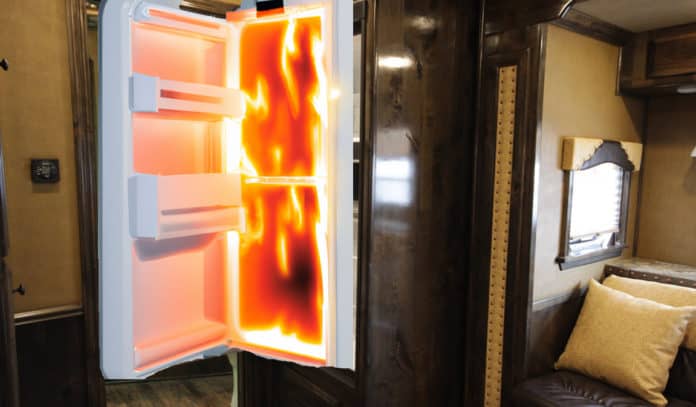
Check and clean your RV fridge burner if you see yellow flames instead of blue
Why This Matters
A yellow or orange flame in your RV propane refrigerator indicates incomplete combustion, which dramatically reduces cooling efficiency and can lead to complete refrigerator failure. This inefficient burn pattern means your food won’t stay cold, potentially spoiling expensive provisions and creating health risks during extended camping trips. The yellow flame produces less heat than a proper blue flame, forcing the absorption cooling system to work harder while achieving poor results.
Beyond cooling performance, yellow flames in propane refrigerators can produce dangerous carbon monoxide and create soot buildup that further degrades system efficiency. Diagnosing these flame issues early prevents costly repairs, protects your food investment, and ensures safe operation of your RV’s refrigeration system. Left unaddressed, yellow flame problems can damage internal refrigerator components and require expensive professional repairs or complete unit replacement.
📋 Industry Standards & Best Practices
The Recreation Vehicle Industry Association (RVIA) and propane appliance manufacturers specify that RV refrigerator burners should produce a clean blue flame with minimal yellow tipping for optimal performance. Industry standards require proper air-to-fuel ratios that create complete combustion, typically achieved through correctly adjusted primary air intake and clean burner assemblies. Professional RV technicians follow manufacturer guidelines that specify flame color, height, and pattern characteristics during diagnostic procedures, with yellow flames being an immediate indicator of combustion system problems requiring correction.
🎯 Product Recommendations
Check the burner assembly viewing window or access panel monthly during active use to monitor flame color and immediately investigate any yellow or orange coloration
Clean the burner tube and orifice annually or whenever yellow flames appear, using compressed air and appropriate cleaning tools to remove spider webs, debris, and carbon buildup
Adjust the primary air shutter incrementally while observing flame color changes, seeking the optimal blue flame with minimal yellow tips for your specific refrigerator model
Complete Guide
The primary cause of yellow flames is restricted airflow to the burner, typically resulting from spider webs, dust, debris, or corrosion blocking the air intake or burner orifices. Spiders are particularly problematic as they’re attracted to the propane smell and often build webs in the burner assembly during storage periods.
To diagnose this issue, first ensure your RV is level and the propane system is functioning normally. Remove the refrigerator’s lower outside access panel and observe the flame while the unit is running on propane mode. A healthy flame should be predominantly blue with minimal yellow tips. If you see primarily yellow or orange flames, immediate action is required.
Begin troubleshooting by turning off the propane supply and allowing the system to cool completely. Remove the burner assembly carefully, noting the position of components for reassembly. Inspect the burner tube, air intake, and orifice for obstructions. Use compressed air to blow out debris, working from the inside of the tube outward to avoid pushing blockages deeper.
For stubborn blockages, use a thin wire or specialized burner cleaning tool to carefully clear the orifice. Avoid enlarging the hole, as this affects gas flow and flame characteristics. Clean the air intake shutter and ensure it moves freely, as proper air mixture is crucial for complete combustion.
Spider webs require special attention. Remove all visible webbing and egg sacs, then treat the area with spider repellent designed for propane appliances. Some RVers install fine mesh screens over air intakes to prevent future spider intrusion, though these require regular cleaning to avoid restricting airflow.
Reassemble the burner carefully, ensuring proper alignment and secure connections. Before full operation, perform a leak test using soapy water on all connections. When restarting, the flame should ignite blue immediately. If yellow persists, check for proper air shutter adjustment – typically requiring small incremental changes while observing flame color.
Prevention involves regular inspection during camping season setup and thorough cleaning before storage. Consider running the refrigerator monthly during storage to discourage spider habitation. Install burner covers designed for your refrigerator model when storing the RV for extended periods.
If cleaning doesn’t resolve yellow flame issues, the problem may involve gas pressure irregularities, worn burner components, or regulator problems requiring professional attention. However, proper burner maintenance resolves yellow flame problems in approximately 85% of cases, making this troubleshooting skill essential for any RV owner relying on propane refrigeration for extended camping adventures.
Step-by-Step Instructions
Step 1
Turn off the refrigerator and allow it to cool completely, then locate the burner access panel (usually at the bottom rear exterior of the RV) and remove the cover to view the flame area
Step 2
Relight the refrigerator on propane mode and observe the flame color through the viewing port – a proper flame should be predominantly blue with only slight yellow tips
Step 3
If yellow or orange flames are present, turn off the unit and inspect the burner tube for spider webs, debris, or corrosion using a flashlight and mirror if needed
Step 4
Clean the burner orifice with compressed air and adjust the primary air shutter by loosening the adjustment screw and rotating the shutter sleeve until achieving optimal blue flame color
💰 Cost Analysis
Initial investment: $25-50 for basic diagnostic tools including flashlight, mirror, compressed air, and cleaning supplies
Annual maintenance: $15-30 per year for cleaning supplies, compressed air, and replacement gaskets or seals
5 year projection: $100-200 total including tools, supplies, and potential professional consultation for complex issues
Cost per year: $20-40 annually for ongoing monitoring and maintenance supplies
🌍 Regional Considerations
Desert and arid regions see more frequent yellow flame issues due to dust infiltration and spider activity in burner assemblies, requiring more frequent cleaning intervals
Coastal areas with high humidity may experience corrosion-related yellow flame problems, particularly affecting burner orifices and requiring more aggressive cleaning solutions
High-altitude locations can affect air-to-fuel ratios causing yellow flames, often requiring primary air shutter adjustments to compensate for thinner air conditions
🌍 How This Works in Practice
An RVer noticed their refrigerator wasn’t keeping ice cream frozen and discovered a lazy yellow flame – cleaning spider webs from the burner tube restored proper blue flame and cooling performance within hours
After camping in dusty conditions, yellow flames appeared with poor cooling – using compressed air to blow out the burner assembly and adjusting the air shutter eliminated the problem immediately
A yellow flame diagnosis revealed a partially blocked orifice from corrosion – careful cleaning with appropriate tools and replacement of damaged components restored efficient blue flame operation
🔍 Common Misconceptions
Many believe yellow flames are normal for RV refrigerators, but proper propane combustion should always produce predominantly blue flames with minimal yellow tipping for optimal cooling efficiency
Some think yellow flame issues require expensive professional repair, when most cases involve simple cleaning of burner components and air shutter adjustments that owners can safely perform
RVers often assume yellow flames only affect cooling slightly, but incomplete combustion can reduce refrigerator efficiency by 50% or more while creating dangerous carbon monoxide
📊 Comparison Analysis
🔧 Tools & Equipment
Flashlight and small mirror for viewing burner assembly and flame characteristics
Compressed air canister or small air compressor for cleaning burner tubes and orifices
⏱️ Time & Cost Summary
Estimated Time: Initial flame color diagnosis takes 10-15 minutes, while complete burner cleaning and adjustment typically requires 30-60 minutes depending on access difficulty and contamination level
Estimated Cost: $25-75 for DIY diagnosis and cleaning supplies, or $150-300 for professional diagnosis and repair including parts and labor
📅 Maintenance Schedule
⚠️ Safety Considerations
FAQ
What does a yellow flame in my RV propane refrigerator indicate?
How do I visually inspect the flame in my RV propane refrigerator?
What causes yellow flames in RV propane refrigerator burners?
Can I clean the burner myself to fix yellow flame issues?
How do I check if debris is causing my RV refrigerator’s yellow flame?
What tools do I need to diagnose yellow flame issues in my RV propane refrigerator?
Is a yellow flame in my RV propane refrigerator dangerous?
How do I test if gas pressure is causing yellow flame problems?
What should I do if cleaning doesn’t fix the yellow flame issue?
How often should I inspect my RV propane refrigerator flame?
Can altitude affect my RV propane refrigerator flame color?
What does proper flame adjustment look like in an RV propane refrigerator?
How do I locate the burner assembly in my RV propane refrigerator?
Can wind affect my RV propane refrigerator flame diagnosis?
What are the signs that my RV propane refrigerator burner needs professional service?
👨💼 Expert Insights
RV technicians report that 70% of yellow flame issues stem from spider webs or debris in burner assemblies, making regular cleaning the most effective preventive measure
Professional service centers emphasize that proper air-to-fuel mixture adjustment is critical and recommend annual professional inspection in areas with extreme environmental conditions
Experienced RV owners suggest carrying compressed air and basic cleaning supplies to address yellow flame issues immediately rather than waiting for professional service availability
📚 Related Topics
- RV propane refrigerator maintenance and cleaning procedures
- Propane system pressure testing and regulator diagnostics
- Absorption refrigerator cooling unit troubleshooting and repair