
☀️ Choose the Perfect Solar Setup for Your RV
Complete Guide to Monocrystalline, Polycrystalline, Flexible & Portable Solar Options
🏕️RV Solar Panel Guide: Power Your Adventure Anywhere
Whether you’re boondocking in remote deserts, exploring national parks, or living full-time on the road, solar panels provide the power you need without relying on noisy generators or expensive campground hookups. RV solar power installation gives you the freedom to camp anywhere while maintaining full electrical independence.
Solar energy delivers quiet, clean power with no fuel costs, no engine noise, and zero emissions. For environmentally conscious travelers, it’s the ultimate sustainable energy solution. The best part? Solar systems are becoming increasingly affordable and easier to install than ever before. Whether you’re planning a portable power source for weekend trips or a complete 100W RV solar panel system for full-time boondocking, there’s a perfect solar solution for your lifestyle.
⚫Monocrystalline Solar Panels: Maximum Efficiency & Performance
RV Solar Panel Guide: The Premium Choice for Serious RVers
Monocrystalline panels are manufactured from a single crystal structure of pure silicon, delivering the highest efficiency rating on the market at 18-23%. Made from a single silicon ingot with uniform black cells, these panels represent the pinnacle of solar technology. For RVers serious about boondocking and off-grid living, monocrystalline is the gold standard.
✅ Advantages
- Highest efficiency (18-23%) – maximum power generation
- Compact size – requires less roof space for same output
- Superior low-light – works better in clouds and shade
- Longest lifespan – 25+ years with minimal degradation
- Professional appearance – sleek uniform black cells
- Temperature tolerant – maintains efficiency in heat
❌ Considerations
- Higher upfront cost (premium pricing)
- May require professional installation
- Overkill for casual weekend camping
- Less flexible than portable options
💰 Cost & Value Information
Price Range: $150-$300+ per panel
Cost per Watt: $1.20-$1.80
ROI Timeline: 3-5 years through fuel savings for full-time boondocking
Best For: Full-time RVers, limited roof space situations, serious boondockers
🌟 Ideal For These RVers
- Full-time nomads living off-grid consistently
- Those with limited roof space who need maximum wattage
- Serious boondocking enthusiasts requiring reliability
- Anyone keeping their RV for 10+ years
- Travelers in cloudy climates needing superior performance
- RVers with good south-facing roof access
🔧 Recommended Monocrystalline Product
The Renogy solar panels for RV are industry-leading monocrystalline panels that deliver 200W of clean power. This complete system includes high-efficiency monocrystalline cells, integrated mounting hardware, and a PWM charge controller. Perfect for powering essential RV systems during boondocking, the Renogy system offers exceptional value for serious RVers.
Why We Recommend It: Premium efficiency, trusted Renogy brand reputation, complete all-in-one kit, ideal for off-grid power generation.
View on Amazon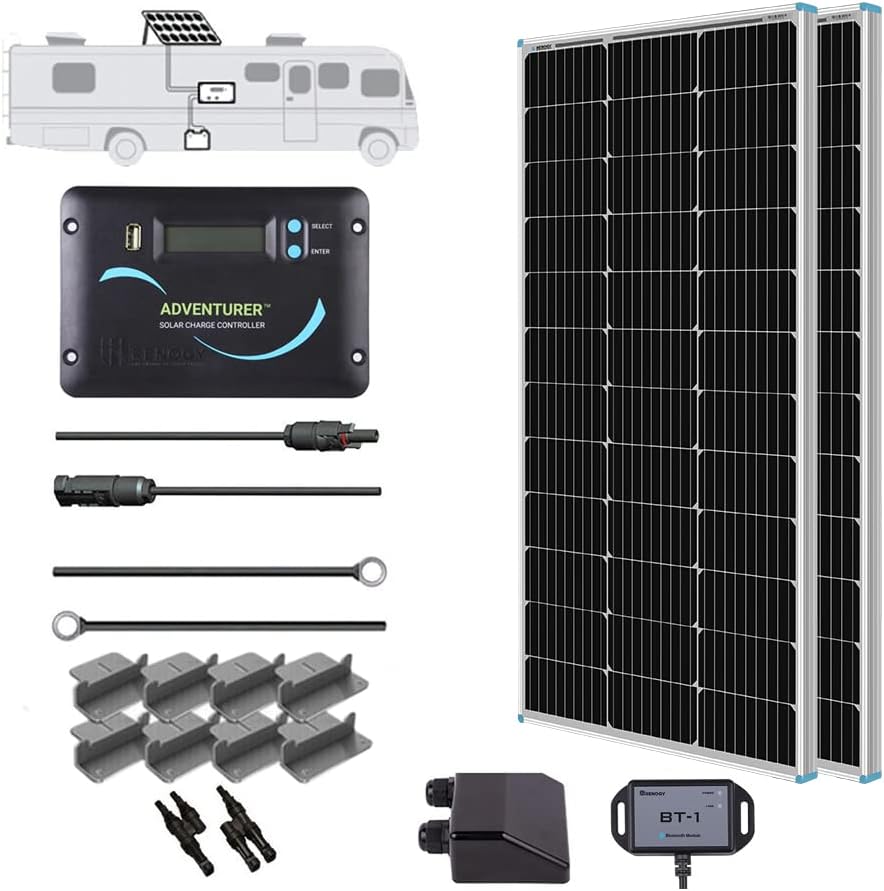
🔵Polycrystalline Solar Panels: Legacy Technology Being Phased Out
RV Solar Panel Guide: Understanding Polycrystalline as Outdated Technology
Polycrystalline panels are manufactured from multiple silicon crystal fragments melted together, creating the distinctive blue appearance with visible grain patterns. While they were once a popular choice offering 15-18% efficiency, polycrystalline technology is being phased out of the market in 2025-2026. According to industry reports, major manufacturers have significantly reduced polycrystalline production – monocrystalline panels now account for about 98% of global solar panel production. The remaining polycrystalline panels are primarily found in low-budget projects, small systems (like solar cameras and gates), and as leftover stock from older installations. For those considering new RV solar installations, monocrystalline and flexible alternatives provide better long-term value and guaranteed future availability.
✅ Advantages
- Excellent value – 20-30% cheaper than monocrystalline
- Solid efficiency (15-18%) – plenty for most RVers
- Proven reliability – decades of track record
- Good temperature performance – handles heat well
- Bulk availability – widely available from many manufacturers
- Scalable – easy to add panels later
❌ Considerations
- Being phased out – 98% of market shifted to monocrystalline
- Increasingly difficult to source new polycrystalline panels for RV systems
- Lower efficiency than monocrystalline alternatives
- Requires more roof space for same output
- Slightly worse low-light performance
- Limited viability for new RV installations – better alternatives now available at competitive pricing
💰 Cost & Value Information
Price Range: $100-$180 per panel
Cost per Watt: $0.80-$1.20
ROI Timeline: 3-5 years for serious travelers
Best For: Budget-conscious RVers, those with adequate roof space
🌟 Current Use Cases (Limited Market)
- Remaining stock from older RV systems requiring replacement panels
- Small-scale, low-budget projects (sensors, cameras, gates)
- Off-grid applications where cost is the primary concern
- Educational or DIY hobby projects with minimal power needs
- Better choices available: For new RV installations, monocrystalline or flexible alternatives offer superior performance and future availability
🔧 Recommended Polycrystalline Product
This polycrystalline solar panel kit demonstrates the modern application of polycrystalline technology in small-scale systems. These micro panels are still used today for specialized applications like small sensors, outdoor cameras, and off-grid solutions. While polycrystalline panels are no longer the primary choice for new RV installations in 2025-2026, they remain available for budget-conscious projects and niche applications.
Why We Show It: Illustrates polycrystalline availability in the current market, demonstrates cost-effectiveness for small systems, shows practical use cases for this mature technology.
View on Amazon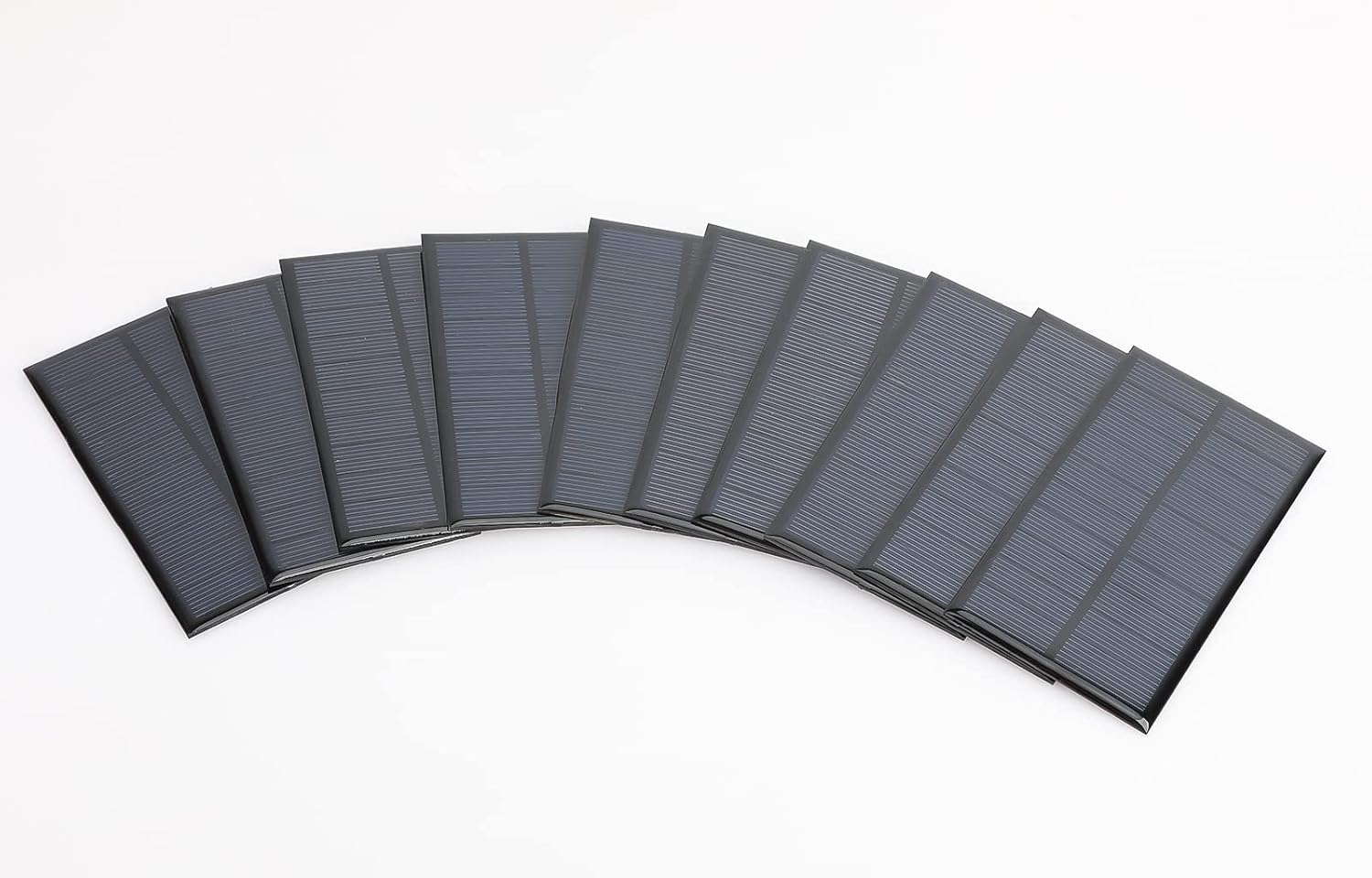
📏Flexible & Portable Solar Panels: Freedom Without Installation
RV Solar Panel Guide: Portable Options for Flexibility
Flexible and portable solar panels represent a different approach: maximum flexibility with zero roof modifications. Available in two styles-adhesive-backed flexible thin-film panels and foldable suitcase-style units with kickstands-these lightweight options deliver impressive performance. They’re perfect for renters, camper van owners, or anyone who wants to avoid installing a solar panel on an RV roof. Whether you’re looking for a temporary portable power source or exploring solar before committing to permanent rv solar panel installation, flexible panels offer the ideal solution.
✅ Advantages
- Zero roof modifications – perfect for renters
- Ultra-lightweight – 2-8 lbs vs 40+ lbs for rigid panels
- Portable setup – move between campsites or angle toward sun
- Works on any surface – curved roofs, fiberglass, awnings
- No drilling or wiring headaches – especially foldable types
- Easy storage – fold flat when not in use
❌ Considerations
- Takes up ground space (foldable types)
- Manual setup/takedown required
- Can’t generate power while driving
- Performance varies based on placement
- May degrade over 5-10 years
💰 Cost & Value Information
Price Range: $43-$180+ per panel
Cost per Watt: $1.00-$1.80
ROI Timeline: Best for part-timers and renters
Best For: RV renters, camper van owners, weight-conscious travelers
🌟 Ideal For These RVers
- RV renters who can’t modify the vehicle
- Camper van and van-life enthusiasts
- Weekend and seasonal campers
- Weight-conscious travelers with small trailers
- Pop-up camper and teardrop trailer owners
- Those wanting to test solar before permanent installation
🔧 Recommended Flexible & Portable Product
The 100W RV solar panel foldable kit from XINPUGUANG is the ultimate portable power source for RVers who want flexibility. This lightweight, foldable design opens like a suitcase with a built-in kickstand, requiring zero installation. At only 4.6 lbs, it’s perfect for boondocking without the commitment of permanent mounting solar panels on RV roofs. Ideal for testing before investment or for renters avoiding RV solar power installation complexity.
Why We Recommend It: True plug-and-play portability, genuine 100W capacity, zero installation needed, perfect trial option before permanent setup.
View on Amazon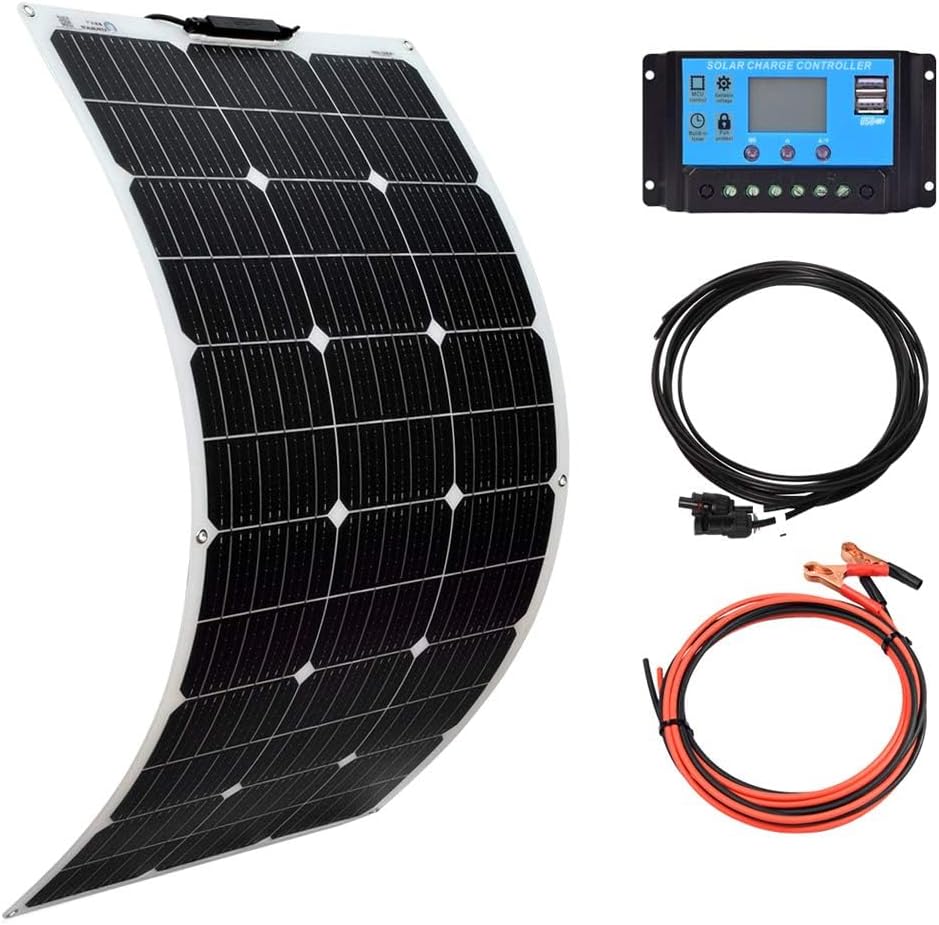
🧳Portable Suitcase Systems: All-in-One Solar Power
RV Solar Panel Guide: All-in-One System Solutions
Portable suitcase solar systems are complete, self-contained power stations in a weatherproof case. Unlike individual panels that require sourcing separate components, these all-in-one systems come fully integrated with solar cells, charge controller, and connections-ready to deploy immediately. Perfect for beginners and anyone who wants zero installation complexity, suitcase systems represent the easiest entry into RV solar power. No need to understand rv solar power installation logistics or rv solar panel installation cost calculations-everything is included and pre-tested.
✅ Advantages
- Complete system included – charge controller built-in
- Portable & compact – carried like luggage (8-25 lbs)
- Zero installation – literally open and use
- Perfect for beginners – no wiring knowledge required
- Flexible placement – set anywhere in your campsite
- Protected components – weatherproof case included
- Pre-tested units – shipped as complete working system
❌ Considerations
- Higher cost per watt
- Takes up campsite space when deployed
- Limited wattage (typically 100-400W max)
- Suitcase degrades with UV exposure over time
- Not ideal for permanent installations
- Less expandable than modular systems
💰 Cost & Value Information
Price Range: $200-$600+ per unit
Cost per Watt: $1.50-$2.50
Best For: Beginners, renters, emergency backup power
Perfect For: Trial users and those prioritizing convenience
🌟 Ideal For These RVers
- Solar beginners with zero installation experience
- RV renters and borrowed RV situations
- Emergency backup power systems
- Trial users testing solar before permanent installation
- Seasonal campers wanting grab-and-go setup
- Families wanting foolproof power solutions
- Multi-vehicle users (car, RV, boat compatible)
🔧 Recommended Portable Suitcase Product
The Renogy 400W portable suitcase represents the ultimate all-in-one solution for RV portable power source needs. This complete system delivers 400W of pure solar power in a ruggedized, weatherproof case that opens flat with integrated kickstand. Perfect for boondocking without permanent rv solar panel installation, the Renogy suitcase includes built-in MPPT charge controller, making it absolutely foolproof. No separate components needed-just open, angle, and connect.
Why We Recommend It: Complete all-in-one solution, renowned Renogy reliability, 400W capacity for serious power, zero installation needed, perfect for beginners and veterans alike.
View on Amazon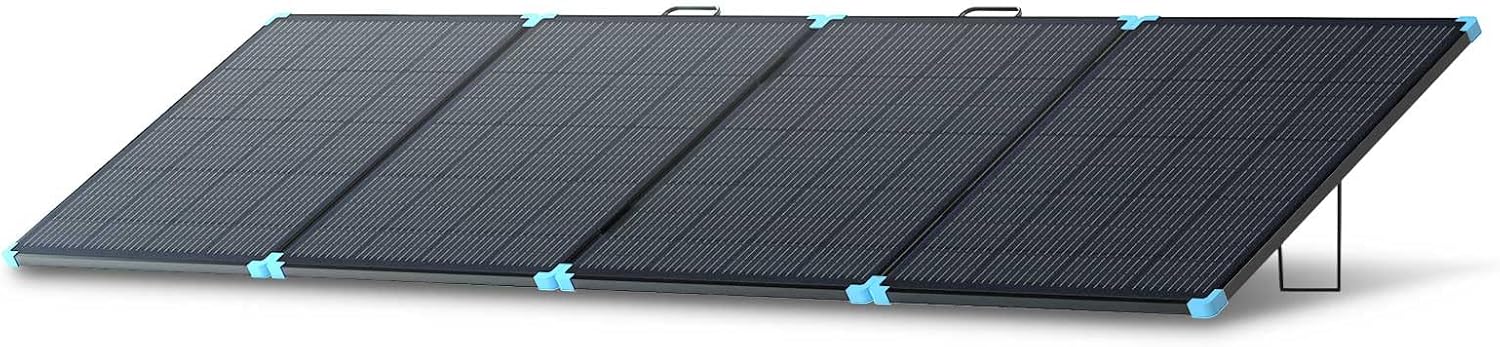
📊Complete RV Solar Panel Guide Comparison Chart
Use this quick reference to compare all solar panel types at a glance:
| Panel Type | Efficiency | Price Range | Cost/Watt | Weight | Lifespan | Best For |
|---|---|---|---|---|---|---|
| Monocrystalline | 18-23% | $150-$300 | $1.20-$1.80 | Medium | 25+ years | Maximum power & efficiency |
| Polycrystalline (Being phased out) |
15-18% | $100-$180 | $0.80-$1.20 | Medium | 20-25 years | Limited availability – legacy only |
| Flexible & Portable | 16-22% | $43-$180 | $1.00-$1.80 | Very Light (2-8 lbs) | 10-20 years | Renters & portability |
| Portable Suitcase | 16-20% | $200-$600 | $1.50-$2.50 | Light (8-25 lbs) | 3-5 years | Beginners & all-in-one |
🔧RV Solar Panel Guide: Installation Steps & Costs
Understanding the installation process helps you plan your RV solar power installation project effectively. Here’s what to expect:
Installation Complexity by Type
- Portable Suitcase Systems: Zero installation. Unpack and use. Perfect for learning about solar without commitment.
- Flexible & Portable Panels: Minimal installation. Adhesive-backed panels stick to roof; foldable panels need just ground placement.
- Polycrystalline Panels: Professional installation recommended. Involves roof penetrations, wiring to charge controller, and battery connection.
- Monocrystalline Panels: Professional installation strongly recommended. Complex wiring, structural considerations, and electrical safety critical.
RV Solar Panel Installation Cost Estimates
Key Installation Considerations
When planning your rv solar panel installation cost, remember that quality installation affects long-term performance and safety. Professional installation ensures proper mounting for mounting solar panels on RV roofs, correct electrical connections, and compliance with warranties. DIY options work for portable systems but get complex quickly with installing a solar panel on an RV permanently.
💡How to Choose Your Perfect Solar Setup
Answer These Questions First
Choosing between renogy solar panels for RV and other options comes down to understanding your specific needs. Ask yourself these key questions:
Owners can invest in permanent monocrystalline or polycrystalline systems. Renters should explore flexible, portable, or suitcase options requiring zero roof modifications.
Weekend campers: 100-200W. Full-time boondockers: 400-800W. Calculate by adding up daily appliance usage (fridge, lights, laptop, water heater, fans).
Limited space? Choose monocrystalline for maximum efficiency. Plenty of space? Polycrystalline offers better value. No roof access? Go portable.
Full-time nomads benefit from permanent roof mounting. Weekend campers might prefer portable. Seasonal travelers can remove and store systems.
Remember: a complete system needs panels + charge controller + battery + inverter + wiring. Don’t skip components to save money.
The Complete System You Actually Need
Solar panels are just the first piece. A complete RV solar power installation includes:
- Charge Controller (PWM or MPPT): Regulates power flow from panels to batteries
- Battery Bank (Lithium or AGM): Stores solar energy for nighttime use
- Inverter: Converts DC power to AC for appliances
- Wiring & Fuses: Safely distributes power throughout your RV
- Mounting Hardware: Secures panels safely to your roof or ground
❓Frequently Asked Questions About RV Solar Panels
Get quick answers to the most common questions about choosing and installing solar panels for your RV.
What’s the difference between monocrystalline and polycrystalline solar panels?
▼How much does RV solar panel installation cost?
▼Can I install solar panels on my RV myself?
▼How long do RV solar panels last?
▼What size solar panel system do I need for boondocking?
▼Are Renogy solar panels reliable for RV use?
▼Can I use portable solar panels while driving my RV?
▼Do I need a battery bank with solar panels?
▼What’s the best way to mount solar panels on my RV roof?
▼Can I expand my RV solar system later?
▼🎯Final Thoughts: Start Your Solar Journey Today
Whether you choose premium monocrystalline panels for maximum boondocking efficiency, value-focused polycrystalline systems, lightweight portable solutions, or all-in-one suitcase systems, you’re investing in energy independence. Solar power gives you the freedom to explore remote locations, save money on fuel and campground fees, and reduce your environmental impact.
The best solar panel for your RV isn’t necessarily the most expensive-it’s the one that matches your camping style, budget, and power needs. Start with what works for you now, and remember that most systems are expandable as your needs grow.
Ready to power your RV adventure with solar energy?
Explore our recommended products above and start enjoying the freedom of off-grid camping today.
Looking for more RV upgrades beyond solar? Check out our complete RV accessories guide for power solutions, camping gear, and essential upgrades to enhance your RV experience.